

DISTRICT HEATING
generate and sell up to 30% additional heat energy out of your flue gas
driving efficiency in modern district heating networks
Biomass heating plants are constantly caught between the conflicting priorities of economic efficiency, ensuring security of supply and compliance with legal requirements. As a manufacturer of flue gas treatment systems, we strive to develop solutions to overcome the following challenges.
- Increasing economic efficiency
- Achieving sustainability goals
- Maximizing performance - Expanding heating plants with optimal use of resources
- Expanding fuel quality range
the SAVE ENERGY solution
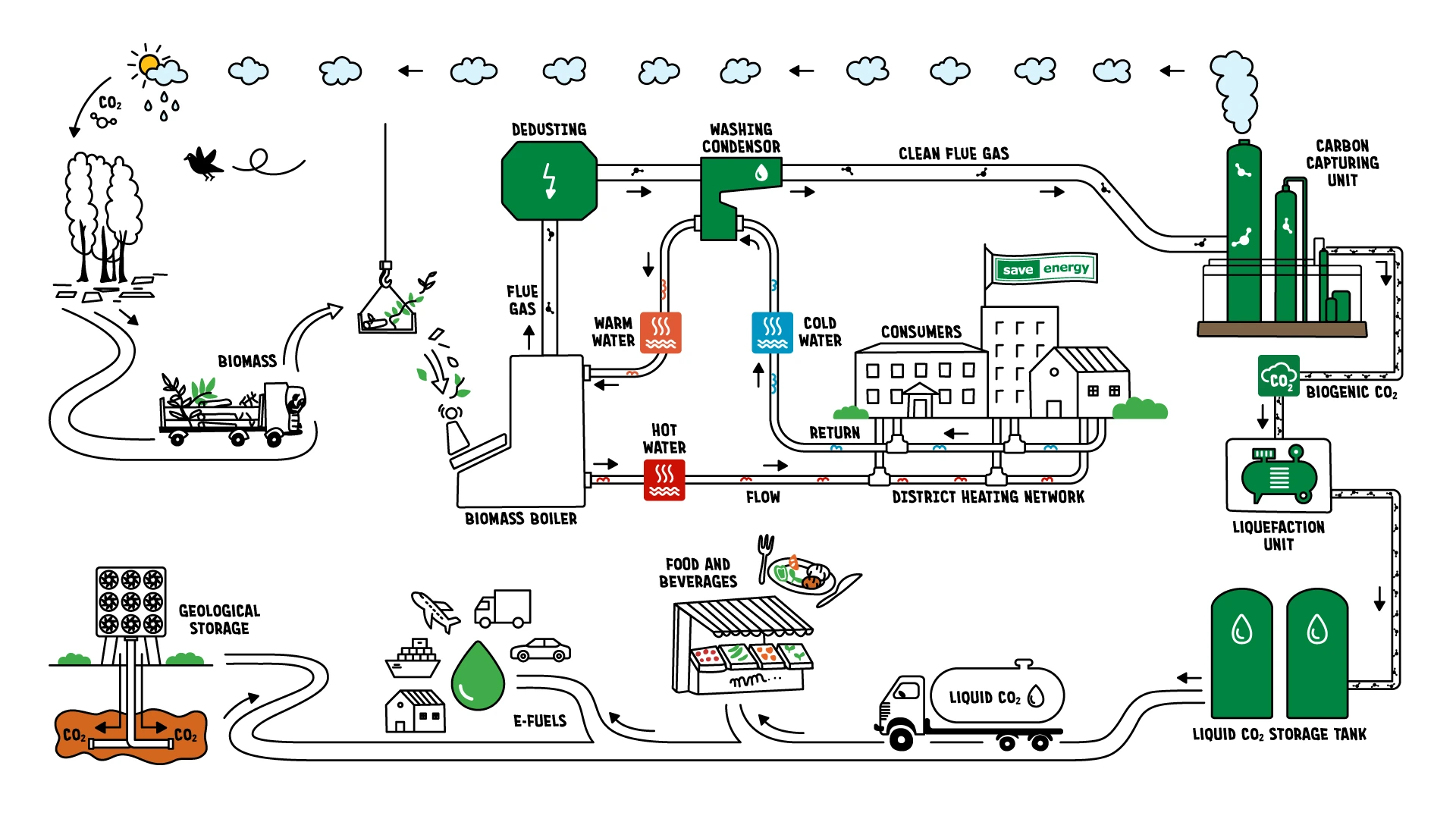
Those who want to achieve low emission values and maximum yield from the biomass fuel used rely on advanced combustion technologies and combine highly efficient components that maximize the primary energy used and convert it into available useful energy while simultaneously reducing emissions. Flue gas purification to reduce particle emissions in flue gases and keep them below the legal limits is mandatory for every heating plant operator. Stricter measures constantly present new challenges. It is advisable to use advanced technology to avoid subsequent measures (including on the building).
SAVE ENERGY’s flue gas precipitators are state-of-the-art and capable of exceeding legal requirements.
Utilizing energy in flue gas - up to 30% additional thermal energy
Depending on the fuel moisture content, the flue gas from biomass combustion contains around 10–25% water vapor by volume. This contains a great deal of stored heat. With flue gas condensation, around 670 kWh can be recovered per ton of condensed water vapor.
Average return temperatures below 50 °C are required for the efficient use of condensation heat. In heating networks with unsuitable return temperatures, “poor” consumers can be identified by the SAVE ENERGY temperature management system. Based on an economic analysis, the temperature analysis derives a concrete action plan for optimizing the heating network.
advantages
20–30% additional thermal energy – fuel savings
Increased overall efficiency and profitability of the heating network – return on investment (ROI)
Increased performance with low investment
Security of supply – independence from fossil fuels
Reduction of particulate emissions in exhaust gases below the legal limits
Contribution to the energy transition
solution modules


find the right solution
Talk to our specialists about optimizing your district heating infrastructure.