

FLUE GAS CLEANING
the essential basis for low emissions and reliability
flue gas cleaning for emission reduction
The first step towards reliably low flue gas emissions and compliance with regulations.
SAVE ENERGY flue gas cleaning solutions are high-performance separators that remove 99% of particles and pollutants. They thus meet the highest ecological requirements and legal standards.
These systems are designed for continuous operation and demanding industrial environments and form the basis for safe, efficient and sustainable energy plants.
dry electrostatic precipitator
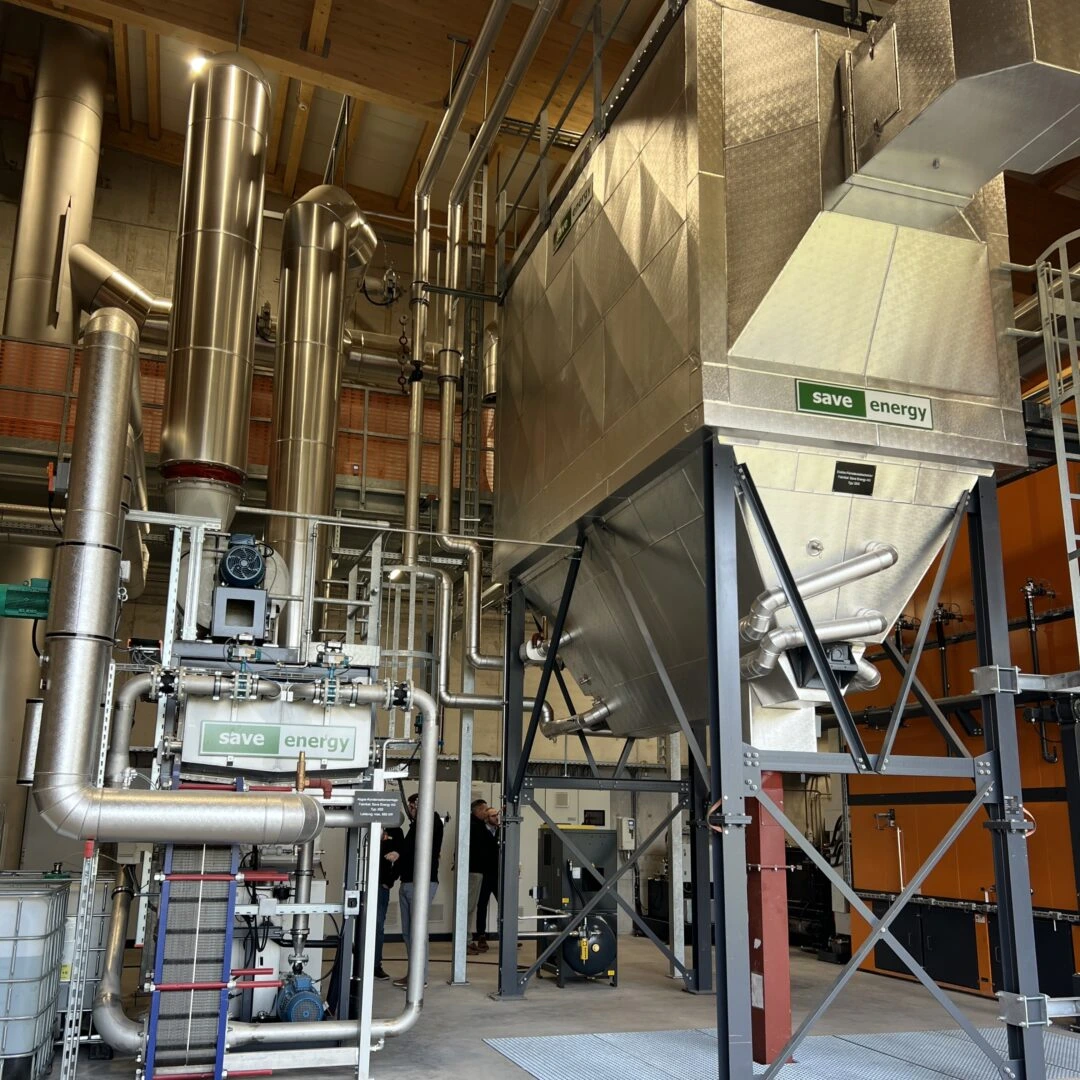
The SAVE ENERGY dry electrostatic precipitator is a high-performance separator that has been specially developed to minimize operating costs, maximize separation efficiency and achieve an availability of around 99%.
How it works
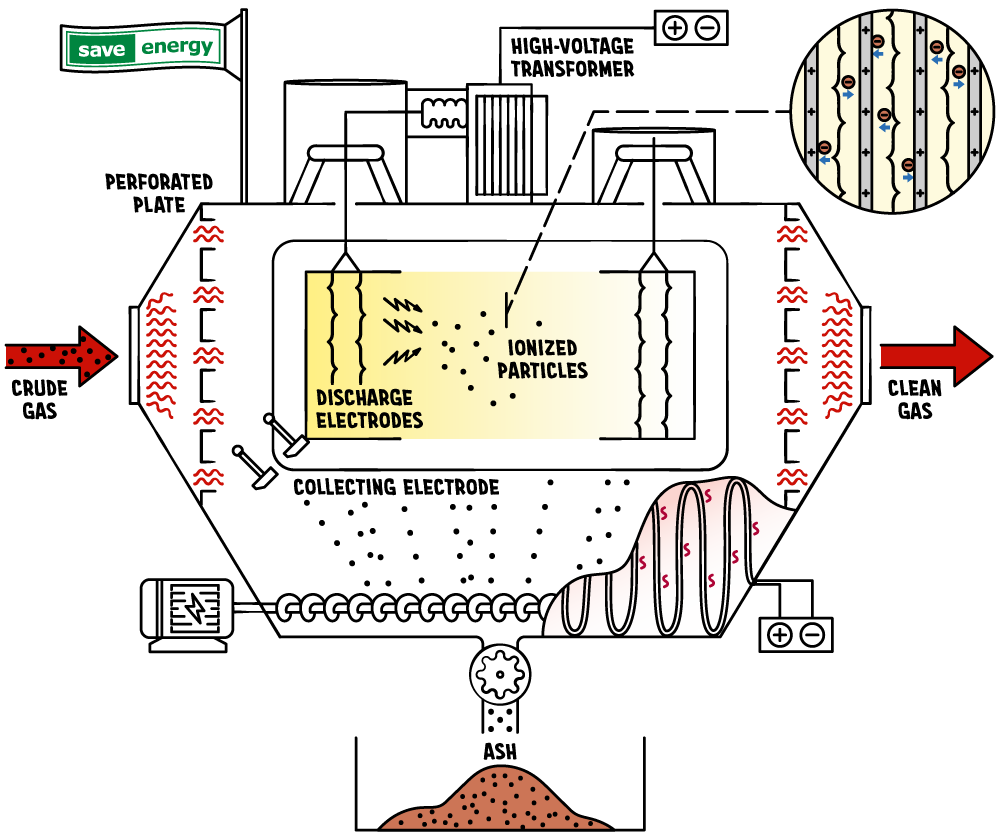
In the SAVE ENERGY dry electrostatic precipitator solids are separated from the flue gas by the effect of an electric field. The electrically neutral dust particles are charged by the spray electrodes. The effect of the electric forces transports the particles to the precipitation electrode, where they are separated from the gas stream.
High-voltage ionization in electrostatic precipitators
The SAVE ENERGY dry electrostatic precipitator is designed as a plate separator. A controlled high-voltage field of up to 86kV is generated on the discharge electrodes. A high field strength builds up in the immediate vicinity of the discharge electrodes. In this active zone, the free electrons are strongly accelerated (gas discharge). This ionization is accompanied by a faint glow and is referred to as a corona. The corona discharge at the tips of the spray electrodes creates gas ions, which attach themselves to the particles and electrically charge the dust particles.
Particle transport for efficient flue gas separation
The charged dust particles are transported in the flow-through separator chamber between the discharge and collecting electrodes across the direction of gas flow to the electrically grounded precipitation plates (anodes) and separated from the gas stream. This flow, which moves from the active zone through the passive zone to the precipitation electrode, is referred to as electric wind.
Continuous operation and mechanical cleaning of flue gas
The separated particles form a dust layer on the collecting plates. Due to the grounding of the collecting plates, the dust particles lose their charge and can be cleaned mechanically. Both the collecting plates and the discharge electrode frames are tapped cyclically at different intervals by two hammer mills. The dust particles are detached by the mechanical impulse and fall into the ash hopper. The system runs continuously throughout the entire process, ensuring very high availability.
Advantages
Low maintenance and service costs
Easy access, automated dust discharge via step hopper walls and remote monitoring systems that reduces manual work and downtime.
Low operating costs
Intelligent energy management results in low electricity consumption and efficient operations.
Low investment costs
A compact, double-hopper design and optimal gas distribution reduces construction requirements and upfront investment.
Long-term Swiss-engineered reliability
Swiss-engineered quality ensures reliable performance, low maintenance and a long service life for maximum return on investment (ROI).
wet electrostatic precipitator
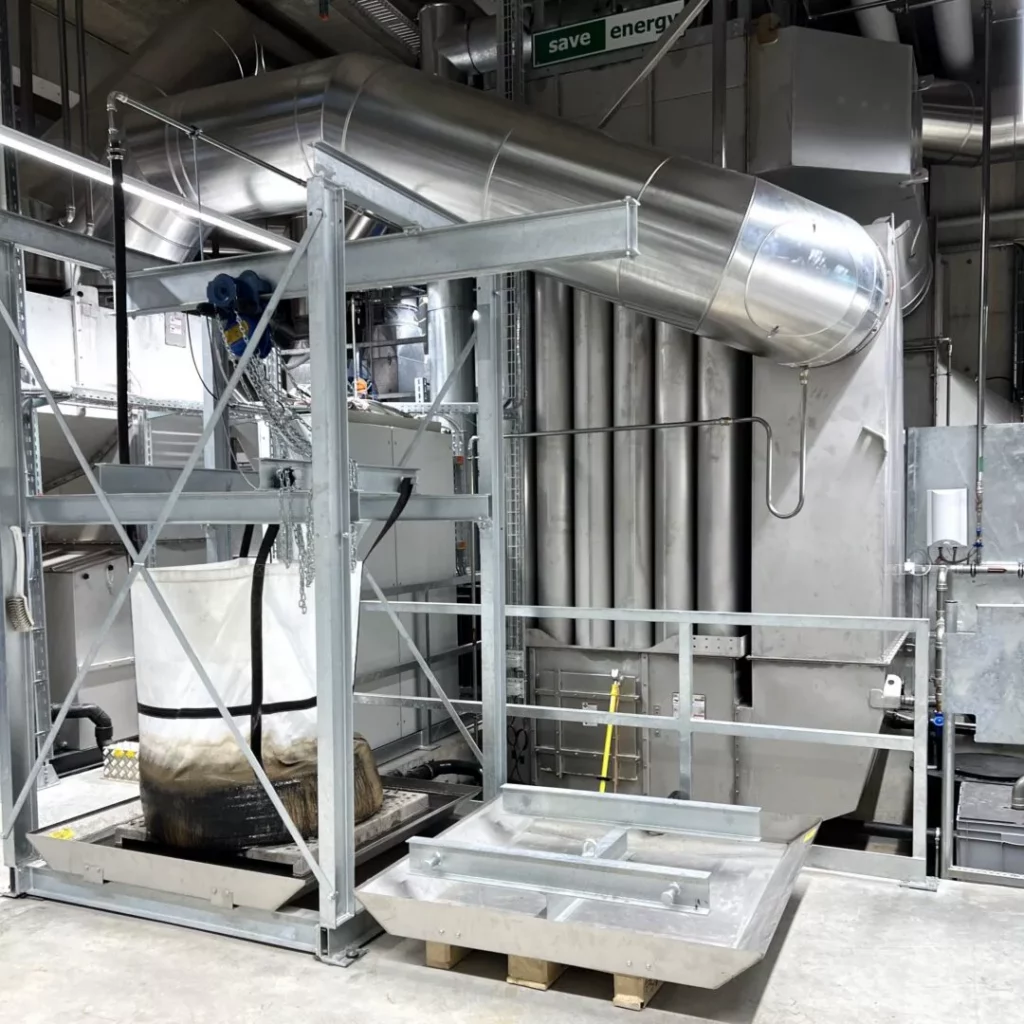
The SAVE ENERGY wet electrostatic precipitator is also a high-performance separator. The wet process guarantees dust emissions of less than 10 mg/Nm3 with an availability of around 99%.
The separator tubes are mainly cleaned naturally via the condensate film on their surfaces. No mechanical installations are required for cleaning. This results in low-maintenance and robust operation and sets the highest standards in terms of availability and durability.
The SAVE ENERGY wet electrostatic precipitator is located after the flue gas condenser. The cooled flue gas has a reduced volume. This makes the SAVE ENERGY wet electrostatic precipitator compact and space-saving.
How it works
In the SAVE ENERGY wet electrostatic precipitator, solids are separated from the flue gas by the action of an electric field. The electrically neutral dust particles are charged by the discharge electrodes. Under the influence of electrical forces, the particles are transported to the collecting electrode and thus separated from the gas stream.
Self-cleaning design for low maintenance
The SAVE ENERGY wet electrostatic precipitator is designed as a pipe separator. The pipe surfaces act as collecting electrodes. The flue gas condenses on the free-standing pipe surfaces. The solids are continuously transported to the water treatment system via the condensate. This makes the wet electrode precipitator self-cleaning and insensitive to soiling. Thanks to this self-cleaning design, there is no need for a mechanical tapping device to clean the collecting electrodes. This also results in a far lower maintenance requirement.
Compact design through upstream flue gas condensation
Thanks to the upstream SAVE ENERGY flue gas condenser, the flue gas is cooled down. The flue gas enters the wet electrode precipitator at a temperature of about 50°C in a fully saturated state. These low temperatures result in a reduced volume flow. This permits the compact design of the SAVE ENERGY wet electrode precipitator.
Maximum separation efficiency in all operating modes
As the wet electrode precipitator is operated in a ‘wet’ condition in all operating modes, there is no risk of the dew point being undershot in partial load mode. In the dry separation procedure, if the dew point is undershot the collecting electrodes gum up. In all modes the SAVE ENERGY wet electrostatic precipitator guarantees a maximum separation degree and thereby complies with the highest ecological standards, which fall greatly below the legal requirements.
Advantages
High separation efficiency
The wet electrostatic precipitator is a high-capacity separator. The wet procedure guarantees dust emissions of below 10 mg/Nm3 at an availability of around 99%.
Compact design
The wet electrostatic precipitator is arranged downstream of the flue gas condenser. The cooled flue gas has a reduced volume. This means that the SAVE ENERGY wet electrostatic precipitator is compact and thus saves space.
Low-maintenance design
Separator collecting pipes are naturally cleaned by a condensate film, eliminating mechanical cleaning systems and reducing maintenance effort. This sets top standards regarding availability and durability.
Swiss-engineered reliability
Engineered in Switzerland, the system ensures robust performance, high availability and a long service life under industrial operating conditions.
industrial applications
We tailor our high-performance flue gas treatment solutions to meet the unique challenges and opportunities of your specific sector.
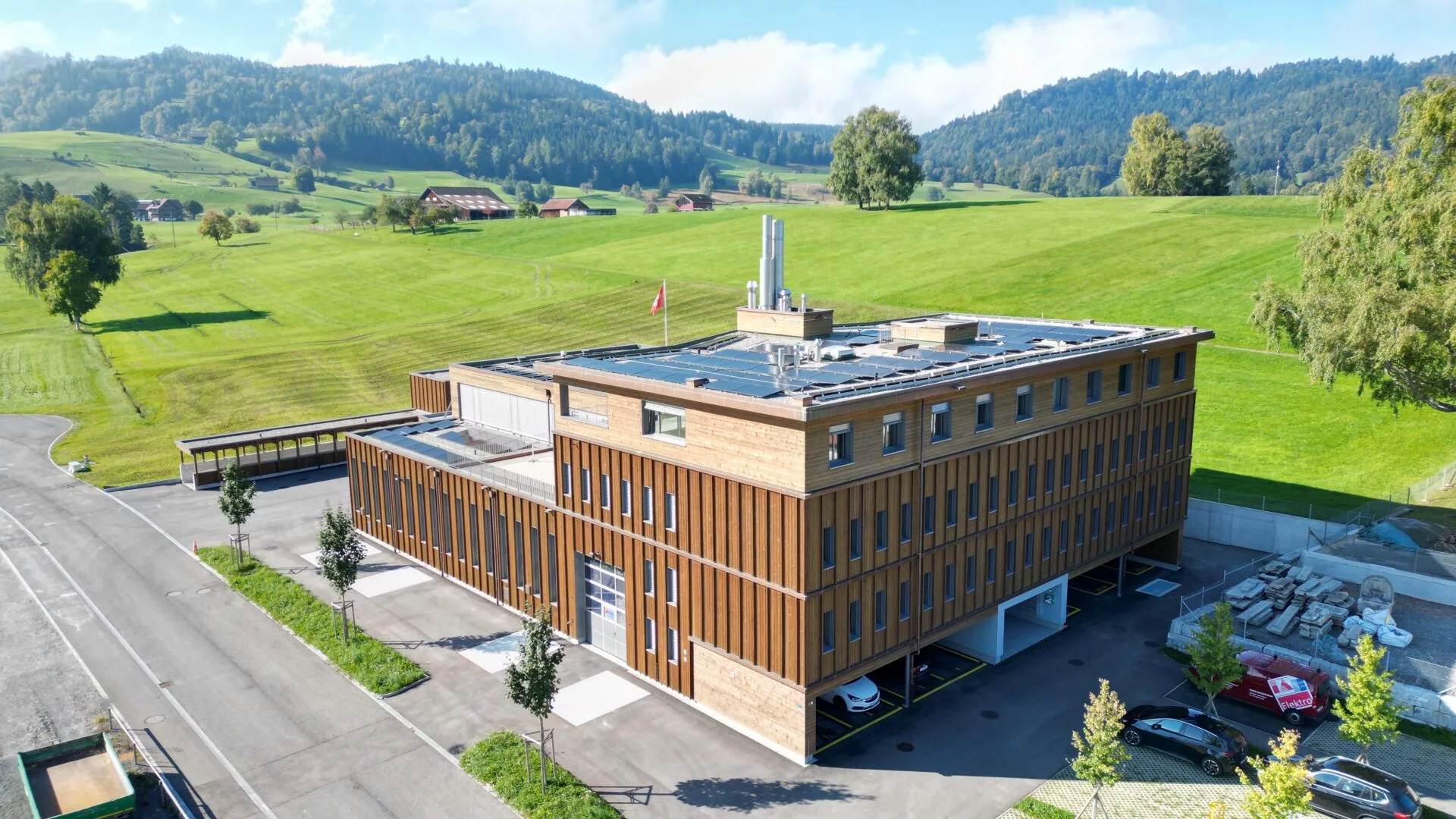
District Heating
Increase sellable heat by 20-30% with your existing infrastructure.
optimize your flue gas treatment
Are you looking for a strong partner with extensive expertise to design a highly efficient biomass heating system?